by captrmetz » April 22, 2014, 8:17 pm
I must agree with Captain Paguette, Master of the Wilfred Sykes, in saying that Captain McSoreley was responsible for the sinking of his ship, the cargo, and the deaths of his crew of twenty-nine men.
I remember the night the Fitzgerald went down. We were tied up to our dock in Thunder Bay, Ontario and I saw many ships at anchor in the bay waiting for the storm to die out.
The two ships, Anderson and Fitzgerald, went right up the middle of Lake Superior following one another. If the truth were known I bet each captain thought about going to anchor in Thunder Bay but each one thought, "Well, the other ship is not mentioning going to anchor so I will not mention going to anchor either.” This led to both ships continuing on course. Captain McSoreley was a ‘heavy-weather-man.’
In my career I have been with several ‘heavy-weather-men.’ On one trip that I remember well, we were passing Whitefish Point and gale warnings were up when I mentioned to the captain that all the ships at anchor looked like a small city with all the deck lights showing on each ship. The captain looked at the ships at anchor and said, "Richard, we will make Christians out of our crew tonight.” I thought to myself, oh-boy! Eight hours later I was on the wheel steering for my life. My legs were spread apart as far as I could spread them while trying to steer the given course but the ship was rolling so much that I thought of tying myself to the wheel to keep from falling over. Finally the third mate broke down and yelled to the captain "What in the hell are you trying to do - kill us all?” The old man thought for a while and slowly turned to me and said, "Richard put her head into the wind." As far as I know the captain never said a word to the third mate to answer his question.
I remember two experiences I had on the ship Pierson Daughters. The first one was when we were out bound at Cove Island entrance to Lake Huron and the captain rolled her so much that a ship near us called and said he could see red lead paint on the bottom of the ship. We had damage throughout the ship because she rolled so much. The second one was when we were in a following sea. The captain was in eastern Lake Superior and ran out of lake so he had to turn the ship around and head back into the sea. While turning, the ship almost did not make the turn. She was caught in the trough of a wave. She made the turn but she rolled so much that some of the hatch coamings had cracks.
I think since the Fitzgerald went down the 'heavy-weather-men’ have changed how they proceed. I also believe that the Fitzgerald got too close to Superior Shoals and bottomed out.
The shoals are a dangerous place and are very foreboding and scary. In an east gale I use to go up the north shore and when the wind was on my stern I would alter course to the west, heading for Thunder Bay. I would leave standing orders to pass the shoals five miles north of the shoals and call me ten miles before the shoals. I could see white water five miles off when I passed. I always wonder how many ships sank there in the old days before the Superior Shoals were discovered in the 1930’s.
There were no bodies found in the wheelhouse of the Fitzgerald because when the bow went under crashing out all the pilot house windows tons of water came crashing through and everything that was not secured to the deck went crashing through the chart room and down the captains’ stairway to the next deck below. Just like a funnel or drain pipe. But this is only my thinking, we will probably never know for sure what really happened; we can only guess....
The shipwrecks that I dove on all had their hatch covers laying in the cargo holds’. I think the escaping air in the holds blew the hatch covers off when they sank.
Thanks for reading. Capt. R. Metz
- Attachments
-
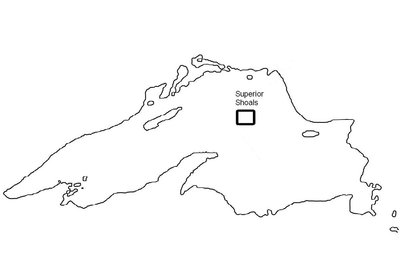
- Superior Shoals
-
I must agree with Captain Paguette, Master of the Wilfred Sykes, in saying that Captain McSoreley was responsible for the sinking of his ship, the cargo, and the deaths of his crew of twenty-nine men.
I remember the night the Fitzgerald went down. We were tied up to our dock in Thunder Bay, Ontario and I saw many ships at anchor in the bay waiting for the storm to die out.
The two ships, Anderson and Fitzgerald, went right up the middle of Lake Superior following one another. If the truth were known I bet each captain thought about going to anchor in Thunder Bay but each one thought, "Well, the other ship is not mentioning going to anchor so I will not mention going to anchor either.” This led to both ships continuing on course. Captain McSoreley was a ‘heavy-weather-man.’
In my career I have been with several ‘heavy-weather-men.’ On one trip that I remember well, we were passing Whitefish Point and gale warnings were up when I mentioned to the captain that all the ships at anchor looked like a small city with all the deck lights showing on each ship. The captain looked at the ships at anchor and said, "Richard, we will make Christians out of our crew tonight.” I thought to myself, oh-boy! Eight hours later I was on the wheel steering for my life. My legs were spread apart as far as I could spread them while trying to steer the given course but the ship was rolling so much that I thought of tying myself to the wheel to keep from falling over. Finally the third mate broke down and yelled to the captain "What in the hell are you trying to do - kill us all?” The old man thought for a while and slowly turned to me and said, "Richard put her head into the wind." As far as I know the captain never said a word to the third mate to answer his question.
I remember two experiences I had on the ship Pierson Daughters. The first one was when we were out bound at Cove Island entrance to Lake Huron and the captain rolled her so much that a ship near us called and said he could see red lead paint on the bottom of the ship. We had damage throughout the ship because she rolled so much. The second one was when we were in a following sea. The captain was in eastern Lake Superior and ran out of lake so he had to turn the ship around and head back into the sea. While turning, the ship almost did not make the turn. She was caught in the trough of a wave. She made the turn but she rolled so much that some of the hatch coamings had cracks.
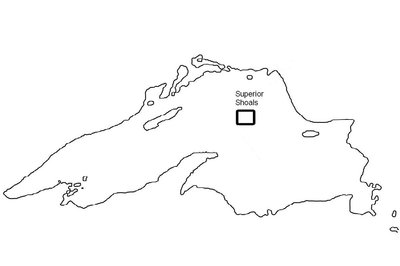
I think since the Fitzgerald went down the 'heavy-weather-men’ have changed how they proceed. I also believe that the Fitzgerald got too close to Superior Shoals and bottomed out.
The shoals are a dangerous place and are very foreboding and scary. In an east gale I use to go up the north shore and when the wind was on my stern I would alter course to the west, heading for Thunder Bay. I would leave standing orders to pass the shoals five miles north of the shoals and call me ten miles before the shoals. I could see white water five miles off when I passed. I always wonder how many ships sank there in the old days before the Superior Shoals were discovered in the 1930’s.
There were no bodies found in the wheelhouse of the Fitzgerald because when the bow went under crashing out all the pilot house windows tons of water came crashing through and everything that was not secured to the deck went crashing through the chart room and down the captains’ stairway to the next deck below. Just like a funnel or drain pipe. But this is only my thinking, we will probably never know for sure what really happened; we can only guess....
The shipwrecks that I dove on all had their hatch covers laying in the cargo holds’. I think the escaping air in the holds blew the hatch covers off when they sank.
Thanks for reading. Capt. R. Metz