by captrmetz » January 5, 2016, 11:38 am
Make Love to That North Shore
We departed the Soo Locks and headed for Thunder Bay with east gales blowing. I remembered what old Captain Bill Smith had once told me: “Make love to that North Shore; she will be your friend.” With this in mind, I headed the bow of the old ship up the north shore of Lake Superior,
Once on top of the big lake, I would haul around and set course for Thunder Bay. At the same time, the wind would back to the northeast and then further back to the north. Sometimes, the weatherman was way off in his prediction. This was one of those times.
The east gale turned into an easterly storm, and would stay that way for at least 18 hours. We reduced speed to half ahead, as we were in no hurry to get to the top of the lake. We sailed up on the inside of Michipicoten Island, and the sea was picking up. We could hear the wind whistling through the wheelhouse doors and windows, as it must have done for over 76 years on the old Soo River Trader. A thousand-footer was right behind us on his way to Duluth. Even that huge ship had to stay in the lee of the Ontario land.
A few hours later, and still going half speed, we were nearing the top end of the lake, and there was no way that I was going across to Thunder Bay in an easterly storm. Although I would have the wind and sea on my stern all the way across, when I reached Battle Island Light, I would have to turn and expose my port side to the elements. What if we had an engine failure? No, sir! It was too many “ifs” for me. I decided we would stay put where we were, and we would have a comfortable ride out of it.
Soon our easy ride was in jeopardy. The wind was really howling, and we were getting a backwash from shore. Being in ballast, we were rolling pretty good. I talked to the thousand-footer, who was still behind me, and he reported that he was also rolling. The situation had deteriorated to the point that I did not like the spot which we were in, so I got out the harbor charts for the east side of the lake.
I looked at Marathon and the possibility of anchoring in the bay there until the storm blew itself out. A few years before, I had taken D. C. Everest out of the harbor for Thunder Bay, so I knew the area somewhat. After a close study of the chart, I made up my mind that we would go into Marathon Harbor and ride the hook. My first mate, Peter Columbus, drew the course lines on the chart for entering the harbor. I checked the courses, and decided that was the best course of action to take.
“We’re going to anchor in Marathon Harbor,” I told the thousand-footer captain.
He replied, “I wish we were smaller, because I would follow right in behind you. Good luck, Cap!”
When we turned to make the harbor entrance, I could make out the large mountains on both sides of the entry. While looking from one side to the other through the field glasses, I saw white shoal water just ahead of me! Terrified, I told Peter what I saw. He looked through his glasses and confirmed what I had seen.
I ran to the radar. I rechecked our position. I ran to the table to recheck the chart. We were certainly in the right position to make the entrance to the harbor. What was that white water?
We were too close inside to stop or back her up, so we had no choice but to continue. I had the feeling that I was right and I was wrong - all at the same time. But we kept going. The white water grew nearer and nearer. We were close enough that I could see the lights of buildings inside the harbor. My hands were sweaty. I felt little beads of salt water running down my backbone.
Peter yelled, “Cap, it’s foam!”
“What?” I looked through my glasses again, and now I could see a ridge of thick, white foam. It was being held across the entrance by the east wind and current coming back into the harbor. What a relief! But I lost some of my hair that night.
Safely inside, we picked out a good, deep spot and let go the anchor. Even inside the harbor, the ship was still rolling lazily.
We rolled all that night and half of the next day before we could finally pick up our hook and head for Thunder Bay. The thousand-footer was moving, too.
I sailed Soo River Trader for the rest of that season and laid her up in Toronto, never to sail the old girl again.
She was my favorite ship.
~ ~ ~ ~ ~ ~ ~ ~ ~ ~
Two years later, I made a trip to Port Maitland, Ontario, to watch the scrapper’s torch cut my favorite ship into two-foot square blocks.
“Who are you and what are you doing here?” the foreman asked
“This was my favorite ship,” I told him. “Two years ago, I was captain of her.”
“Well, okay, Cap, go aboard, and if you find anything you want to take home for a souvenir, you can have it. Take your time.”
I walked around the gaps where pieces of steel had already been cut away and made my way into the dining room, where Glenna served me many fine meals. I found a salt shaker standing alone inside a bulkhead. I reached over, picked it up, and stuck it into my pocket.
Then I worked my way forward and up to the bridge where I went to the front window and stared out. I remembered the storm-tossed night that I brought her into Marathon Harbor, and the white “shoal” water.
- Attachments
-

- Soo River Trader ahead of the hull of the Elmglen
-
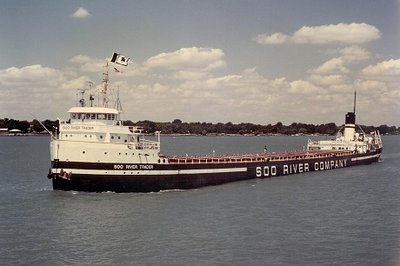
- Soo River Trader
Make Love to That North Shore
We departed the Soo Locks and headed for Thunder Bay with east gales blowing. I remembered what old Captain Bill Smith had once told me: “Make love to that North Shore; she will be your friend.” With this in mind, I headed the bow of the old ship up the north shore of Lake Superior,
Once on top of the big lake, I would haul around and set course for Thunder Bay. At the same time, the wind would back to the northeast and then further back to the north. Sometimes, the weatherman was way off in his prediction. This was one of those times.
The east gale turned into an easterly storm, and would stay that way for at least 18 hours. We reduced speed to half ahead, as we were in no hurry to get to the top of the lake. We sailed up on the inside of Michipicoten Island, and the sea was picking up. We could hear the wind whistling through the wheelhouse doors and windows, as it must have done for over 76 years on the old Soo River Trader. A thousand-footer was right behind us on his way to Duluth. Even that huge ship had to stay in the lee of the Ontario land.
A few hours later, and still going half speed, we were nearing the top end of the lake, and there was no way that I was going across to Thunder Bay in an easterly storm. Although I would have the wind and sea on my stern all the way across, when I reached Battle Island Light, I would have to turn and expose my port side to the elements. What if we had an engine failure? No, sir! It was too many “ifs” for me. I decided we would stay put where we were, and we would have a comfortable ride out of it.
Soon our easy ride was in jeopardy. The wind was really howling, and we were getting a backwash from shore. Being in ballast, we were rolling pretty good. I talked to the thousand-footer, who was still behind me, and he reported that he was also rolling. The situation had deteriorated to the point that I did not like the spot which we were in, so I got out the harbor charts for the east side of the lake.
I looked at Marathon and the possibility of anchoring in the bay there until the storm blew itself out. A few years before, I had taken D. C. Everest out of the harbor for Thunder Bay, so I knew the area somewhat. After a close study of the chart, I made up my mind that we would go into Marathon Harbor and ride the hook. My first mate, Peter Columbus, drew the course lines on the chart for entering the harbor. I checked the courses, and decided that was the best course of action to take.
“We’re going to anchor in Marathon Harbor,” I told the thousand-footer captain.
He replied, “I wish we were smaller, because I would follow right in behind you. Good luck, Cap!”
When we turned to make the harbor entrance, I could make out the large mountains on both sides of the entry. While looking from one side to the other through the field glasses, I saw white shoal water just ahead of me! Terrified, I told Peter what I saw. He looked through his glasses and confirmed what I had seen.
I ran to the radar. I rechecked our position. I ran to the table to recheck the chart. We were certainly in the right position to make the entrance to the harbor. What was that white water?
We were too close inside to stop or back her up, so we had no choice but to continue. I had the feeling that I was right and I was wrong - all at the same time. But we kept going. The white water grew nearer and nearer. We were close enough that I could see the lights of buildings inside the harbor. My hands were sweaty. I felt little beads of salt water running down my backbone.
Peter yelled, “Cap, it’s foam!”
“What?” I looked through my glasses again, and now I could see a ridge of thick, white foam. It was being held across the entrance by the east wind and current coming back into the harbor. What a relief! But I lost some of my hair that night.
Safely inside, we picked out a good, deep spot and let go the anchor. Even inside the harbor, the ship was still rolling lazily.
We rolled all that night and half of the next day before we could finally pick up our hook and head for Thunder Bay. The thousand-footer was moving, too.
I sailed Soo River Trader for the rest of that season and laid her up in Toronto, never to sail the old girl again.
She was my favorite ship.
~ ~ ~ ~ ~ ~ ~ ~ ~ ~
Two years later, I made a trip to Port Maitland, Ontario, to watch the scrapper’s torch cut my favorite ship into two-foot square blocks.
“Who are you and what are you doing here?” the foreman asked
“This was my favorite ship,” I told him. “Two years ago, I was captain of her.”
“Well, okay, Cap, go aboard, and if you find anything you want to take home for a souvenir, you can have it. Take your time.”
I walked around the gaps where pieces of steel had already been cut away and made my way into the dining room, where Glenna served me many fine meals. I found a salt shaker standing alone inside a bulkhead. I reached over, picked it up, and stuck it into my pocket.
Then I worked my way forward and up to the bridge where I went to the front window and stared out. I remembered the storm-tossed night that I brought her into Marathon Harbor, and the white “shoal” water.